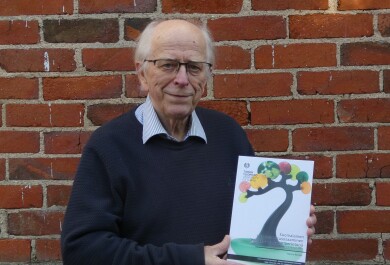
Väitös (virusoppi): MSc Hira Khan
MSc Hira Khan esittää väitöskirjansa ”Interaction of Filovirus Proteins with Innate Immune Pathways” julkisesti tarkastettavaksi Turun yliopistossa keskiviikkona 18.3.2026 klo 13.00 (Turun yliopisto, Medisiina D, Alhopuro-sali, Kiinamyllynkatu 10, Turku).
Vastaväittäjänä toimii professori, tohtori Varpu Marjomäki (Jyväskylän yliopisto) ja kustoksena dosentti, tohtori Laura Kakkola (Turun yliopisto). Tilaisuus on englanninkielinen. Väitöksen alana on virusoppi.
Tiivistelmä väitöstutkimuksesta:
Filoviruses, including Ebola virus and Marburg virus, are highly pathogenic viruses causing severe hemorrhagic fever disease in humans. Filovirus outbreaks occur in Africa, and the largest Ebola disease outbreak to date was in West Africa in 2014–2016, with more than 28,600 cases reported and fatality rate of 39%.
The immune system of humans consists of fast and robust innate immune response and slower but specific adaptive immune response. Innate immune response acts as an important first barrier against viral infections, however, viruses have mechanisms to evade or delay the innate immune responses to ensure successful infection.
The innate immune system detects viral infection through molecular pathways (e.g., RIG-I) which triggers the production of antiviral cytokines, e.g. interferons. These interferons activate interferon-induced pathways leading to antiviral defence mechanisms that restrict viral replication and spread. Filoviruses counteract these responses through viral proteins that specifically disrupt innate immune signalling pathways. Ebola virus VP35 protein interferes with early immune detection by blocking the activation of RIG-I signalling by viral RNA. Ebola virus VP24 protein suppresses downstream interferon-induced responses by blocking nuclear translocation of activated STAT1, thus preventing the expression of interferon-stimulated antiviral genes.
Discovery of new filoviruses has raised important questions regarding whether these immune evasion mechanisms are conserved across filovirus species. This doctoral thesis focuses on two major filoviral immune antagonists, VP24 and VP35 proteins, and investigates their ability to inhibit antiviral signalling across nine filovirus species, including the most recently discovered filoviruses. The results demonstrate the ability of seven VP24 proteins to inhibit RIG-I pathway, and eight to inhibit interferon-induced pathway. All nine VP35 proteins inhibited the RIG-I pathway but none had any inhibitory effect on the interferon-induced pathway.
The results demonstrate that VP24 and VP35 proteins of filoviruses are functionally quite conserved enabling efficient suppression of innate immune responses. The findings of this doctoral thesis help to explain the molecular basis of host-filovirus interactions, while also providing information to be utilized for developing antiviral strategies for restoring innate immune responses. Such strategies may help to reduce disease severity and improve preparedness for future filovirus outbreaks.