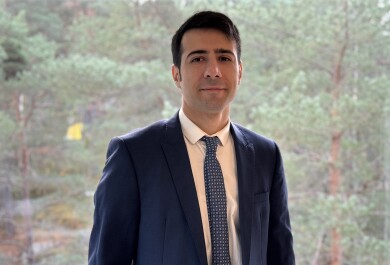
Väitös (solubiologia ja anatomia): MSc Umar Butt
MSc Umar Butt esittää väitöskirjansa ”Phosphorylation Dependant Cancer control” julkisesti tarkastettavaksi Turun yliopistossa perjantaina 20.11.2026 klo 12.00 (Turun yliopisto, Natura, X-luentosali, Vesilinnantie 5, Turku).
Vastaväittäjänä toimii tohtori Pipsa Saharinen (Helsingin yliopisto) ja kustoksena tohtori Jukka Westermarck (Turun yliopisto). Tilaisuus on englanninkielinen. Väitöksen alana on solubiologia ja anatomia.
Tiivistelmä väitöstutkimuksesta:
This thesis investigates the regulatory roles of SHARPIN and CIP2A in cancer progression, focusing on their interactions with protein phosphorylation. In the first study mass spectrometry and kinase assays identified phosphorylation of SHARPIN at S146 is crucial for its interaction with the ARP2/3 complex and lamellipodia formation. Functional assays demonstrated that this modification promotes SHARPIN mediated cancer cell invasion, regulated by the balance of ERK1/2 and PP2A activity. Furthermore, inhibition of phosphorylation at S146 reduces metastasis in a zebrafish model, suggesting potential therapeutic targets to combat metastasis.
The second study focuses on CIP2A, a known inhibitor of PP2A, in ovarian cancer. Low CIP2A expression (22% of ovarian cancers) correlates with better chemotherapy responses. CIP2A-deficient ovarian cancer cells exhibited hypersensitivity to APR-246, mediated by PP2A reactivation that inhibits NF-κB signaling. Cell viability and caspase assays confirmed that APR-246 induces selective apoptosis in these cells, supported by in vivo studies showing increased responsiveness in CIP2A-deficient tumors in mouse models. Thus, loss of CIP2A function enhances PP2A activity, sensitizing ovarian cancer cells to APR-246.
Overall, this research underscores the critical roles of PP2A in regulating SHARPIN and CIP2A pathways, highlighting new therapeutic strategies targeting the PP2A signaling axis in metastatic cancers and specific ovarian cancer subtypes.