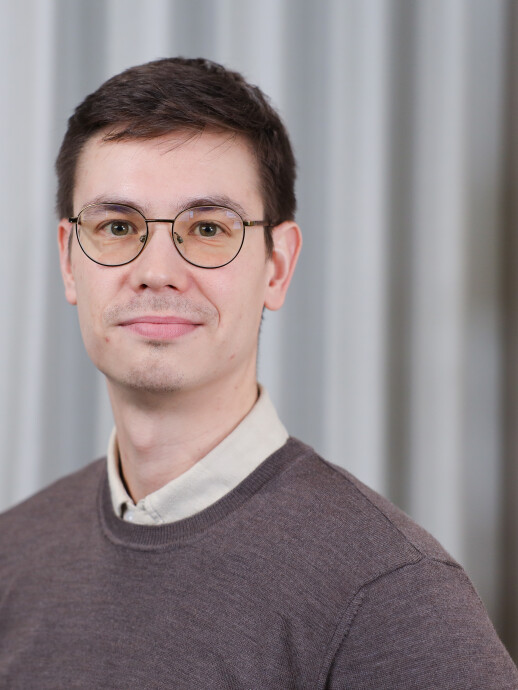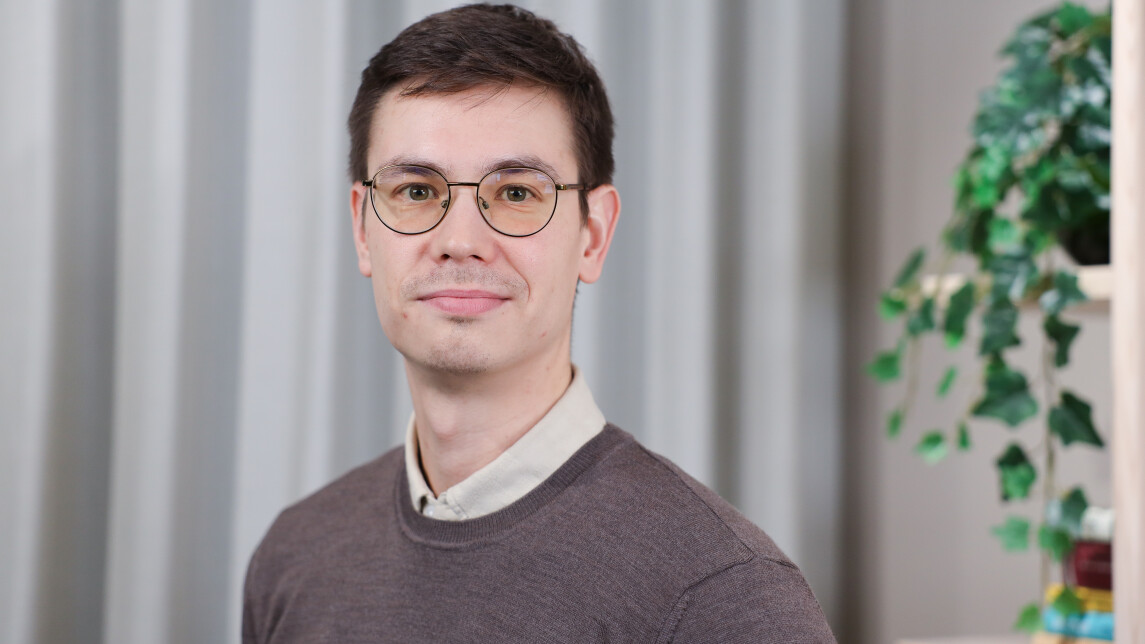
Postdoctoral researcher Miikka Hiltunen is the next featured guest in the Faculty of Law’s 'Researcher in the Spotlight' series.
Name: Miikka Hiltunen
Position in the faculty: Postdoctoral researcher
Degrees: Doctor of Laws
Fields of interest: Digital regulation, EU law, Critical legal research
Describe your career path. What led you to your current position?
I finished my Master of Laws at the University of Helsinki in 2020. While I was interested in exploring several career paths, I decided to “stay at the university” as a doctoral researcher because there was a research project on the regulation of political advertising beginning. This overlapped with my ideas for a doctoral thesis, where I wanted to study the EU regulation of online platforms more broadly. The three-year research project ended up providing a great platform for academic work. Alongside writing my thesis, I got to teach general principles of EU law, present at conferences, have research visits, and gain experience in publishing.
In early 2024, when my thesis funding was nearing its end, I felt I wanted to try work outside academia. So I took an opportunity to join a legislative project at the Ministry of Justice. I worked for two years at the Ministry’s EU Law and Data Protection Unit on legislative projects about the digitalization of public administration, while finishing my doctoral thesis on the side.
I defended my thesis in March 2026, after which I felt the urge to return to academia and start developing new research projects. Now I am happy I can do exactly that.
What projects are you currently working on?
My postdoctoral research expands on my doctoral thesis. While I wrote my doctoral thesis at a time when the EU was drafting a lot of new digital regulation, these regulations have now entered the enforcement phase. At the same time, the Commission is already considering new rules, whereas some of the fairly recent regulatory arrangements have been challenged as excessively cumbersome. Thus, there is a lot one could delve into.
My plan is to start with platform regulation, as I know it best, and then venture progressively into other areas. I am interested in exploring both new legal fields, such as EU contract and company law, and new technologies, such as cloud computing and artificial intelligence.
Have your interests evolved since you finished your studies?
They have indeed. My background is in constitutional law, and in my studies, I did both my bachelor’s and master’s theses on doctrinal questions of fundamental rights. However, even though my master’s thesis already studied law and online platforms, after starting my doctoral research, I wanted to redefine myself, more abstractly and ambiguously, as a scholar of “EU digital regulation and policy.” This was to gain freedom for eclecticism, explore the interplay of different legal mechanisms, leave doctrinal research questions aside, and adopt a critical orientation toward EU law.
In my doctoral thesis, I was especially interested in studying the normative “framings” of values, problems, and technologies embedded in EU digital law and policy. This involves analyzing how the EU understands digital technologies such as platforms, how problems related to technologies are defined, and how the values and goals of policy and regulation are conceptualized. These framings lead to specific legal arrangements and, thus, societal consequences.
In practice, my research covers internal market law, including EU legal competence and free movement rights, as well as specific platform regulation such as the Digital Services and Digital Markets Acts. It also includes data protection law, fundamental rights, consumer law, and media law. I no longer consider myself committed to any specific legal perspective.
If you were not a researcher, what would your profession be?
I would probably be a government lawyer at one of the Finnish ministries or a lawyer at an EU institution, as I enjoyed working at the junction of law and politics. In public administration, your contribution to the organization of society is often quite tangible. On the downside, your ability to argue for the projects and causes that align best with your personal values is much more constrained. I value academic freedom.
What inspires you?
I get inspired by all the scholarly work that enhances our understanding of how seemingly disparate phenomena come together and how societies transform. I admire research that delves into the “nitty gritty” of social and administrative practice, but it’s the more macro-level, synthesizing analyses and narratives that get me most excited about my own research as well. In addition, good academic conversations and insightful exchanges between colleagues are always highly inspiring.