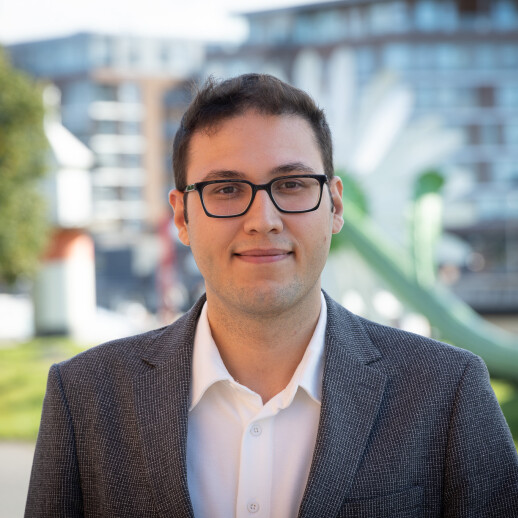
Researcher in the Spotlight: Ertugrul Yildirim
Doctoral Researcher Ertugrul Yildirim is up next on the Faculty of Law's Researcher in the Spotlight series.
Name: Ertuğrul Kaan Yıldırım
Position in the Faculty of Law: Doctoral Researcher
Degrees: Master of Laws (LL.M.)
Fields of interest: Constitutional Law, Philosophy of Law, Jurisprudence, Legal Theory, Human Rights Law, Political Theory.
Describe your career path. What led you to where you are today?
In 2013, I witnessed massive democratic protests across my city, İstanbul. It was the time at which I was preparing for the national university entrance exam, and was completely confused about what faculty and job to choose. The democratic demands of the people, and the violence of the police powers in response, have deeply affected my view of life, and evidently that of my generation too. In Taksim Square, the protesters objected to the government’s intensive and unreasonable intervention in many aspects of their lives, such as nature, the environment, abortion, sexual orientation, free speech and so on, and voiced the opinion that democracy should have a meaning beyond the bare will of the majority. I found myself asking, of course standing by the most basic vocabulary, to what extent law is and ought to be able to ensure and promote our individual autonomy, our living standards within society and our pluralistic, non-discriminatory public sphere. Engaging with heated political issues and debates about the role of the rule of law against the government’s policies inevitably directed me towards the law faculty.

When I started my law studies, I realized that I was not at all interested in the technical and procedural analysis of legal rules and doctrines or their application to specific cases. However, thanks to the well-written legal doctrinal books and my great teachers, I came to understand that law is a dynamic system that develops within a historical, social, economic and political context. Consequently, I turned my attention to more abstract and background disciplines such as legal theory, philosophy of law, ethics and political history. Meanwhile, in the midst of my bachelor’s degree, political tensions in my country were escalating. What we encountered initially was a failed coup attempt, followed by a long period of state of emergency and an authoritarian constitutional amendment that vested all powers in the hands of the president. It seemed transparent how the dynamics of the political regime ultimately determine the function of the law. Constitutional law provides ideal clarity in this respect, as it allowed me not to think about the essence of law through only philosophical abstractions and rationalization, but rather to examine it within the various unequal and oppressive contexts in which it is constructed as the highest norm.
After graduation, I started my legal internship and master’s degree at the same time. During my compulsory internship and brief experience as a lawyer, I was particularly concerned with the issues faced by disadvantaged or vulnerable groups before the courts. These included systemic and structural problems relating to access to justice for immigrants and the failure to uphold basic legal principles in cases involving suspects of alleged terrorist crimes, of which there have been about a million legal cases in my country over the past decade. Stepping away from this intense and highly polemical environment, I was turning to the world of academic and theoretical texts. This was quite relieving and calming for me. More importantly, it gave me the opportunity to delve into the root of the legal and constitutional crisis that we have been experiencing, and to find more nuanced, contextual, and comprehensive answers. But that duality became unbearable. I was searching for integrity in my professional life. I could not manage to live my life like Franz Kafka, who worked as an insurance lawyer by day and wrote fictional novels based on his experiences as a lawyer by night. This is why I decided to pursue a career in academia, conducting theoretical research on law. My master’s thesis had also convinced me to pursue this path. I wanted to do a PhD and enter the academic job market.
I had been dreaming of doing my doctorate abroad for a long time; it would be the biggest challenge of my life. During my quest, Finland seemed to be one of the leading options, and, interestingly, the University of Turku was the first university that I wrote down in my notebook when I was preparing my applications. My greatest chance was meeting my supervisor who approached me with genuine interest and had a great passion and expertise in my research topic. I was absolutely over the moon when he told me that he agreed to work with me.
What projects are you currently working on?
I’m currently working on my own doctoral project, which investigates the ways in which authoritarian-populist regimes have transformed constitutional interpretation. Needless to say, constitutional liberal democracies are facing new sorts of threats and antagonisms. The democratic values and institutions that we assumed were well-functioning and completely stable have been eroded over the past decade. These new forms of authoritarian regimes no longer make direct references to rigid totalitarian, fascist or racist ideals and their infamous precedents. Since the post-1945 world order was solidly founded upon the principles of human dignity, equality and the rule of law. However, this does not mean that everything is going well. In fact, as lawyers, we may need to be even more concerned.
We are now in hard times that some scholars have called neo-fascist, authoritarian populist, post-liberal or illiberal. In these times, political regimes do not entirely deny the presence of fundamental rights, but rather subtly undermine their scope by changing the way they are interpreted. They also assert that the meanings of political moral concepts, such as equality, freedom, peace, etc. are not what we thought they were. These regimes resort to the interpretive authority of constitutional courts to construct a constitutional counter-narrative, in which all progressive (emancipatory and egalitarian) elements of constitutional history are overturned and replaced with a conservative, reactionary value system. At the same time, constitutional safeguards that could check and balance the power of authoritarian populist leaders are narrowly interpreted, paving the way for the executive branch to act arbitrarily. Thus, the authority of the populist president to interpret the constitution is entrenched. The objective of my thesis is to problematize this ongoing phenomenon that we observe in many jurisdictions around the world. How do authoritarian populist regimes engage with their antipode, namely liberal constitutional interpretation?
In carrying out this research, I aim to examine three fundamental points: a.) Liberal constitutionalism – referencing Ronald Dworkin’s constitutional theory, which is its most robust and representative form – in what ways is it susceptible to the authoritarian populist challenge, and how are these weaknesses and shortcomings manipulated by the populist backlash? b.) How are constitutional texts, history, precedent, and doctrine being utilized in the liberal-conservative split within the U.S. Supreme Court’s decision-making process in the age of Trump’s populism? c.) Within this populist political agenda, what kinds of conflicts arise between the European Court of Human Rights and the constitutional courts of member states when interpreting the Convention, fundamental rights, and national governmental legitimate interests?
Have your interests evolved since finishing your studies?
When I was in my final year at law school, I wrote an article analyzing how the nemo tenetur principle of criminal procedure law have been interpreted by the European Court of Human Rights and domestic courts. This was my first article, and it was through this experience that I got my earliest training in scientific writing and research. Through this work, I realized that the principles of criminal law and the rights of defendants made me aware that each individual’s rights must be taken seriously under all circumstances and without any exceptions.
In the year that I started my master’s degree, I produced two more articles and believed that I would eventually identify the most suitable thesis topic to work on. I was reading texts about the 1990s, the period when the triumph of liberalism was declared and the end of history was proclaimed. The former article I wrote was a book review of Carole Pateman’s The Sexual Contract, in which the feminist scholar argued that modern social contract theories of citizenship excluded women from the public sphere by revealing that liberal conceptions of the individual were no more than patriarchal subjects. My latter article examined how modern theories of citizenship could be evaluated in multicultural societies. Here, I discussed Jürgen Habermas’s constitutional patriotism, Charles Taylor’s politics of recognition and Will Kymlicka’s concept of group rights. The article explored the promises and shortcomings of deliberative, republican, and liberal approaches to citizenship in contemporary pluralistic democracies. At this stage, I began to think that the most essential notion that political and legal theory should address is equality or equal citizenship. I decided to write my master’s thesis on equality.
My preliminary studies on equality led me to the philosophy of Ronald Dworkin, who champions egalitarian liberalism. I was fascinated by his outstanding approach to law as integrity. He offered the view that law is an interpretative enterprise and a branch of political morality. I wrote my thesis on his theory of constitutional democracy and constitutional interpretation. Simultaneously, drawing on his scholarship, I have contributed to public political debates by publishing articles on how Turkey’s constitutional history, principles and rules — which have been subject to shifting tides, sometimes leading to liberal reforms and more progressive court decisions, but often to authoritarian interventions and illiberal judicial and non-judicial exercises — should be read in favor of democracy and the rule of law.
I was looking forward to starting my doctoral studies. My aim was to draft a PhD proposal that builds on Dworkin’s work, while also allowing for post-Dworkinian readings. For this purpose, I established a blog with one of my friends who has worked as a lawyer in Turkey. There, we systematically translated several texts into Turkish highlighting current debates on constitutional interpretation in Anglo-American jurisprudence and constitutional developments in Europe. Based on these texts, I published blog posts focusing on constitutional theory and the empirical methods that can be used to analyze the behavioral patterns of the Turkish Constitutional Court. This blog helped me to formulate my research question. That is to say, my research, which began with Dworkin’s concept of equality, gradually evolved into an understanding of illiberal constitutional interpretation in authoritarian-populist regimes. Thus, I made a smooth transition from legal and political philosophy to constitutional theory.
What would you be, if you were not a researcher?
After completing a law degree, the most common and pragmatic option is indeed to become a lawyer. I’d certainly be moderately happy if I were an attorney or working in another legal profession. However, I couldn’t find anything about it that excited me or fulfilled my life’s aspirations. During my short career as a lawyer, I observed that the legal profession had either become bureaucratic or completely privatized. Both trends frustrated me – I believe that the pursuit of justice and real social transformation requires more than either of these approaches. Apart from being a lawyer, I have always dreamed of becoming a novelist. Since academia entails more than conducting research or teaching, as well as the ability to be a good writer, that is probably why I am still striving to achieve this dream. Moreover, I have a strong passion for the sea. In retrospect, this may seem like an impossible dream; however, I might have become a sea captain if I hadn’t chosen to become a researcher.
What inspires you?
I can draw inspiration from different things, people and bits of wisdom at different times. Essentially, I strive to avoid the monotony and banality of life and keep my mind engaged by constantly exploring fresh and evolving interests. Therefore, I always endeavor to find new books, films, music and places that inspire me. Currently, my greatest source of inspiration is the magical world of Gabriel García Márquez. Since I came to Finland, the composer Jean Sibelius’s music has often been the soundtrack to my work. I can’t imagine anything more aesthetic than enjoying a peaceful day in nature, drinking coffee and getting lost in novels while comparing the imaginary worlds of literature with my own scientific research. You can easily imagine how lucky I am to be in Turku at this point in my life. The walks I take along the Aura River and the lakes I discover while hiking in the forests give me plenty of inspiration. Yet afterwards, leaving such a monolithic and isolated world behind and immersing myself among people and perceiving the tensions between the abstract and the concrete is the destiny of life, and perhaps more importantly, what makes life worthwhile. Learning from and gaining insights from others and finding interesting pieces in their life stories has always broadened my perspective on life.
If you'd like, feel free to share how you've adapted to life in Finland and/or Turku, and/or the Calonia community.
Before coming to Turku, I had spent my entire life in Istanbul, a metropolis that is chaotic and overwhelming but also lively and fascinating. Therefore, you can perhaps understand how much harder it was for me to adapt to the calm, peaceful and stable life of Turku. However, from the outset — the first time I saw Turku Cathedral — I felt a deep bond with the city and the country, and embraced it as my second home. Of course, the biggest part of this adaptation phase was thanks to my supervisor, and afterwards to my friendly, helpful and intellectual colleagues at Calonia. Their interest and support went far beyond my expectations, and I was amazed to find myself in such valuable, high-quality academic and intellectual company. Naturally, I have occasionally encountered difficulties arising from dealing with a new environment, culture and language, particularly the stress and anxiety of a PhD journey. However, my gratitude has always outweighed these challenges thanks to the inclusiveness and thoughtfulness I have found here. Thus, I should conclude by saying that I feel a strong sense of excitement and a desire to make the most of every moment I spend here.